
So I was clicking through my extensions one evening, and I noticed another wallet asking for “full site access.” Whoa! That immediate gut reaction—no way—was my first defense. Seriously? Granting blanket permissions feels like handing someone your house keys. My instinct said: don’t do it. But then I dove deeper, and things got more nuanced, fast.
Browser-extension wallets are convenient. They make DeFi feel effortless. Medium-term thinking says: convenience wins. Short-term thinking screams: risk. Hmm… there’s a trade-off most people gloss over. Initially I thought all wallets were roughly the same, but then I saw subtle design choices that change the security equation. Actually, wait—let me rephrase that: not all wallets are equal, and the differences matter for real money.
Here’s the thing. A browser extension sits between you and every site you visit. It injects code, it listens for RPC calls, it handles signing requests. If the extension is too permissive or poorly designed, a malicious webpage can nudge it. On one hand, UX features like automatic network switching are helpful. On the other hand, those same features can be abused to trick you into signing something you didn’t intend. It’s a messy tension.
What to scrutinize about a wallet extension
Check permissions first. Short list: which sites can connect, whether the extension requests full access, and if it auto-approves transactions. Those are red flags if misused. Look at network handling next. Does the wallet show clear warnings when a dApp asks to change networks? If not, that’s a problem. Also, transaction previews—are they easy to read or buried in jargon?
UI design matters more than people admit. A tiny font, a single “confirm” button, and no clear breakdown of the call you’re signing—those are classic traps. UX folks often prioritize flow, and security teams push back. The result can be a compromise that leans toward convenience, not safety. This part bugs me—because a couple of micro-decisions can cost you entire portfolios.
Wallet architecture is the next layer. Local key management with hardware support is better than cloud storage, obviously. Multi-account isolation (so a compromised dApp can’t enumerate everything) is a feature I want to see. Also, some extensions sandbox their UI from the webpage context to reduce injection risk; that matters a lot. On the other hand, overly complex setups turn away regular users. Balancing security and simplicity is awkward.
Let me give a quick example. I once watched a demo where the wallet auto-switched the network to a malicious testnet before a user signed. The user didn’t notice the subtle change and approved a token approval that drained funds. Oof. It was a small UI tweak that caused a big loss. That taught me to check network prompts twice, triple even.
Practical habits that reduce risk
Always verify the domain of the dApp. Short checklist: hover over links, confirm contracts on Etherscan, and don’t ignore wallet warnings. Seriously—read the permission text. Don’t rush. If something feels off, pause. My rule: pretend it’s not your money for a second and examine the transaction like an auditor would.
Use separate accounts. Keep a hot account for small trades and a cold/hardware-backed account for large holdings. This is boring but effective. Also, limit token approvals—set allowances to the minimum or use one-time approvals when possible. Some wallets help automate allowance revocation; that’s neat and worth the extra click.
Keep extensions updated. Updates often patch subtle attack vectors. Also, prefer wallets that publish security audits and design docs. Audits aren’t perfect, but they show maturity. I’m biased toward tools that explain trade-offs plainly. Transparency matters.
Why I recommend trying rabby
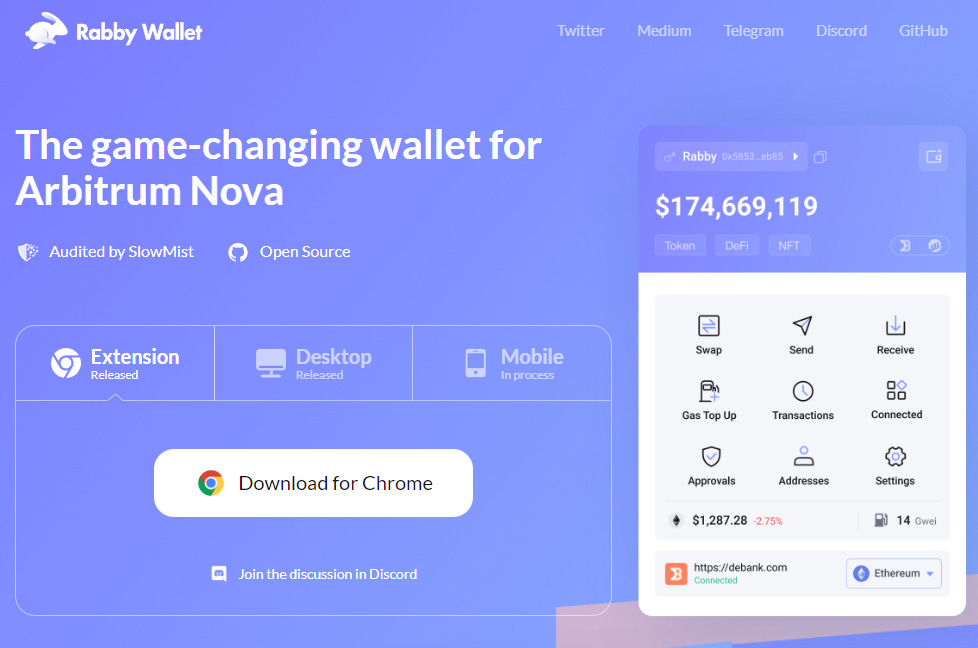
Okay, so check this out—I’ve been using a few wallet extensions and one that stands out for practical security features is rabby. It segments accounts in a way that makes the “hot vs cold” separation intuitive. It also surfaces clear transaction details and gives you control over approvals. I’m not saying it’s perfect—no tool is—but its approach to permission granularity and UI clarity saved me from a couple of sloppy mistakes.
Rabby adds a couple of guardrails without making every action annoying. For someone who trades DeFi regularly, that balance is crucial. (Oh, and by the way—if you try it, don’t import your entire seed phrase into a new machine without thinking. That’s basic, but people do it.)
Some wallets go heavy on flashy integrations. Others double down on minimalism. Rabby’s kind of in-between, leaning pragmatic, which is my jam. Not everyone will love that. I’m not 100% sure it fits every workflow, but it’s a solid default for most users I advise.
FAQ
How do I know if an extension is malicious?
Watch for unusual permission requests, unexpected auto-approvals, or sudden UI changes. Check the publisher’s site, community feedback, and whether the extension code is open or audited. If anything smells phishy, uninstall and restore from your seed on a different wallet.
Should I use multiple wallets?
Yes. Use one for daily interactions and another for long-term holdings, ideally hardware-backed. Segmentation reduces blast radius if one account is compromised.
What about mobile vs. browser extensions?
Mobile wallets can be more isolated but have their own risks. Browser extensions offer convenience, but they require extra vigilance around web-page interactions. Use what fits your threat model, and assume compromise is possible—plan accordingly.