
Okay, so check this out—I’ve been neck-deep in Solana tooling for years. Wow! The thing that always surprises people is how visible everything is on-chain. My instinct said that once you learn the right explorer moves, you can read transactions like a ledger of intent. Initially I thought you needed complicated setups to follow NFT flows, but then I started poking around and realized simple tricks work very very well.
Whoa! NFT tracking feels part detective work, part UX spelunking. Really? Yeah. You watch a mint happen, then you watch a sequence of transfers, sales, and royalties — and suddenly you see a story. On one hand it’s noisy, though actually most patterns repeat: mints, listings, bids, sweeps. I’m biased, but that pattern recognition is what’s fun.
Here’s the thing. NFT ecosystems live in two layers: the marketplace behaviors and the on-chain primitives. Hmm… You can argue that the browser UX matters most, and you’d be right for onboarding. But enterprise-grade analysis leans on raw transaction details. At the low level, each SOL transaction tells you fee payer, instructions executed, program IDs called, and any token transfers — all of which are crucial if you’re trying to verify provenance or detect wash trading.
Initially I thought explorers were all the same. Actually, wait—let me rephrase that: many explorers offer similar endpoints, but the way they surface context is wildly different. Some highlight token metadata, others emphasize portfolio views. On one project I worked on, we patched together three different explorers to get the full picture; it was messy and instructive. The best explorers let you pivot: from wallet to mint to collection without losing the transaction thread.
Why a Good Explorer Matters
Seriously? If you care about NFTs, you need clarity on chain activity. A good explorer reduces time-to-answer — whether you’re verifying an NFT’s origin or investigating a suspicious transfer. It surfaces mint addresses, metadata URIs, token mint counts, and marketplace program interactions, often in ways that make sense even if you’re not an on-chain dev. My first few months I kept misreading logs, and that learning curve is real: logs can be cryptic, and sometimes token metadata is off-chain, so you need to stitch things together.
On one hand, explorers show transaction histories plainly. On the other hand, they also hide the nuance: for instance, sibling spl-token transfers or wrapped SOL nuances can obfuscate ownership. I remember a time when an apparent rug pull was actually a mistaken escrow move — the explorer made it obvious once I chased the instruction flow. Something felt off about the initial tweet thread, and the chain told the real story.
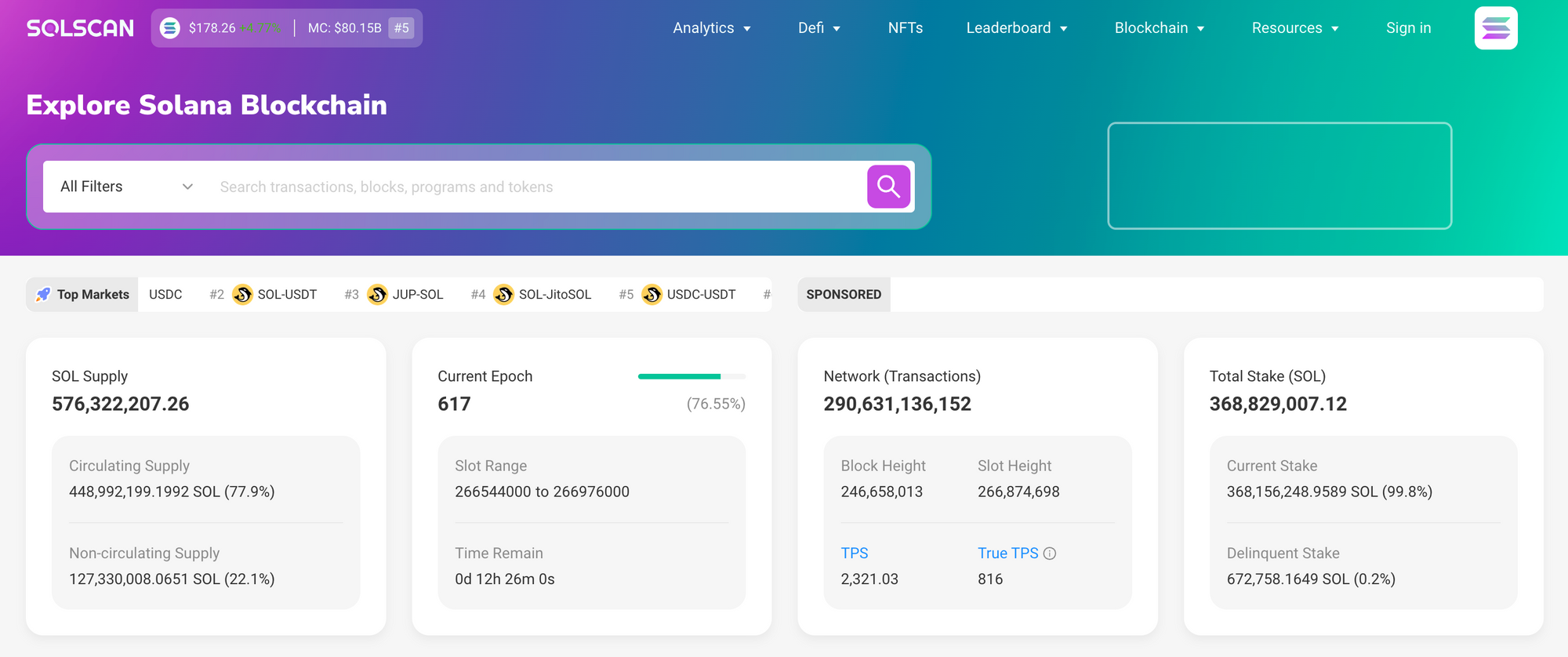
Check this out—if you want a go-to, I often use solscan for quick lookups. Whoa! It gives a neat balance between raw details and user-friendly summaries. My instinct said to trust it for a first pass; then I used other tools to cross-check. I’m not 100% sure every field is perfect, but it’s saved me a lot of time when tracking drops and quick-flip buyers.
Let me be blunt: explorers vary on how they present NFT metadata. Some will show the metadata URI plainly. Others try to resolve the image inline and sometimes fail because the asset sits on IPFS with a gateway hiccup. Oh, and by the way… if the metadata URI is malformed or uses a nonstandard CID format, you’ll start chasing ghosts. That’s when you need to inspect the raw transaction and instruction logs to confirm mint authority signatures.
Whoa! Quick tip: follow the token mint, not just a wallet. Medium-level advice: trace the token mint address to find all holder accounts and history. Longer thought — when marketplaces use escrow or delegate programs, transfers can look like new mints or burns, but instruction decoding reveals the true flow; you’ll want to examine program IDs and instruction data to separate sales from programmatic moves. This is where having a comfortable explorer really helps.
Practical Workflow: Tracking an NFT from Mint to Market
Step one — identify the mint address. Short sentence. Then inspect the initial mint transaction: who signed it, who paid fees, and what metadata URI was recorded. Longer thought here: sometimes the on-chain metadata points to multiple off-chain records or includes an IPFS pointer that itself links to other metadata files, and you’ll need to validate checksums and file types to be confident you’re looking at the canonical asset.
Step two — find holder accounts. Hmm… Look for associated token accounts and any transfer instructions that reference the mint. Medium detail: this reveals early collectors and bots that snipe mints quickly. On one occasion, a bot cluster showed up in the first hour and redistributed tokens across dozens of wallets, which betrayed a coordinated strategy to list in waves.
Step three — correlate to marketplaces. Initially I used heuristics, but actually the reliable way is to inspect program calls for marketplace programs and anchor in on logs that indicate a sale. For Solana, marketplace interactions often involve a small set of program IDs; check those and then check for instruction patterns like ‘sell’, ‘buy’, or ‘transfer’ within logs. This separates legitimate purchases from off-chain promises and manual trades.
Finally, audit royalties and receipts. Short. You’ll want to see whether royalties were paid on-chain or bypassed via an off-chain arrangement. Longer thought: royalty enforcement is partly dependent on marketplace cooperation, and some marketplaces may bypass on-chain splits, so on-chain tracing can reveal noncompliance or creative routing where apparent proceeds never flowed to the creator’s account.
Common Pitfalls and How to Avoid Them
First pitfall: assuming wallet = user. Seriously? Wallet clusters, aggregator contracts, and shared custody setups break that assumption fast. Medium sentence: use address clustering and look for repeated patterns across transactions. Long thought — some actors use program-derived addresses (PDAs) or delegate authorities that hide the human behind a contract, which means behavioral forensics matters as much as ledger reads.
Second: ignoring small transfers. Hmm… tiny SPL transfers are often gas-moving tricks or wash-trade markers. Short. Watch for wash patterns like immediate relists or rapid chain transfers between a tight set of addresses; those often signal market manipulation. I’m biased but that part bugs me — it muddies true market signals.
Third: trusting off-chain metadata blindly. Double check URIs and content hashes. Medium. Sometimes the metadata points to a different image than what’s shown in a marketplace UI, and that mismatch spells trouble. Oh, and by the way… IPFS gateways can be down, so always try multiple gateways or pin services when verifying content integrity.
FAQ — Quick Answers
How do I confirm a mint is authentic?
Check the token mint transaction for the creator’s signature and the metadata instruction. Short. Then verify the metadata URI and content hash against the on-chain record. Longer: if the mint authority matches a verified project wallet and metadata resolves correctly, it’s usually legit; otherwise, dig into the instruction logs and related transactions to confirm provenance.
Can I detect wash trading on Solana?
Yes, to an extent. Look for rapid round-trip transfers, repeated listings at similar prices, and clustered wallets moving the same token back and forth. Medium. Use temporal patterns and volume anomalies to flag suspicious behavior, and then inspect program-level interactions for coordinated strategies.
Which explorer should I use first?
I typically start with solscan for quick lookups. Short. Then I cross-check with other explorers or direct RPC queries when I need deeper logs or program decoding. Longer thought: use multiple tools — the UI convenience of an explorer plus raw RPC or a local script gives you both speed and depth, and that’s the combo that uncovers tricky cases.